Rewritten August 2026. This page used to be a list of named extensions from 2023. That list has not aged well, and republishing it would be actively unhelpful — several of those extensions no longer exist, and at least as importantly, an extension can change hands and be updated with new code at any time, silently, on machines that already have it installed. So this is now a guide to choosing one safely, which does not go stale.
ChatGPT browser extensions add AI to pages you are already on: answers beside your search results, summaries of long articles, drafting help in text boxes. Some are genuinely useful. The category also has a worse safety record than almost any other, and that is worth understanding before you install anything.
Why this category needs care
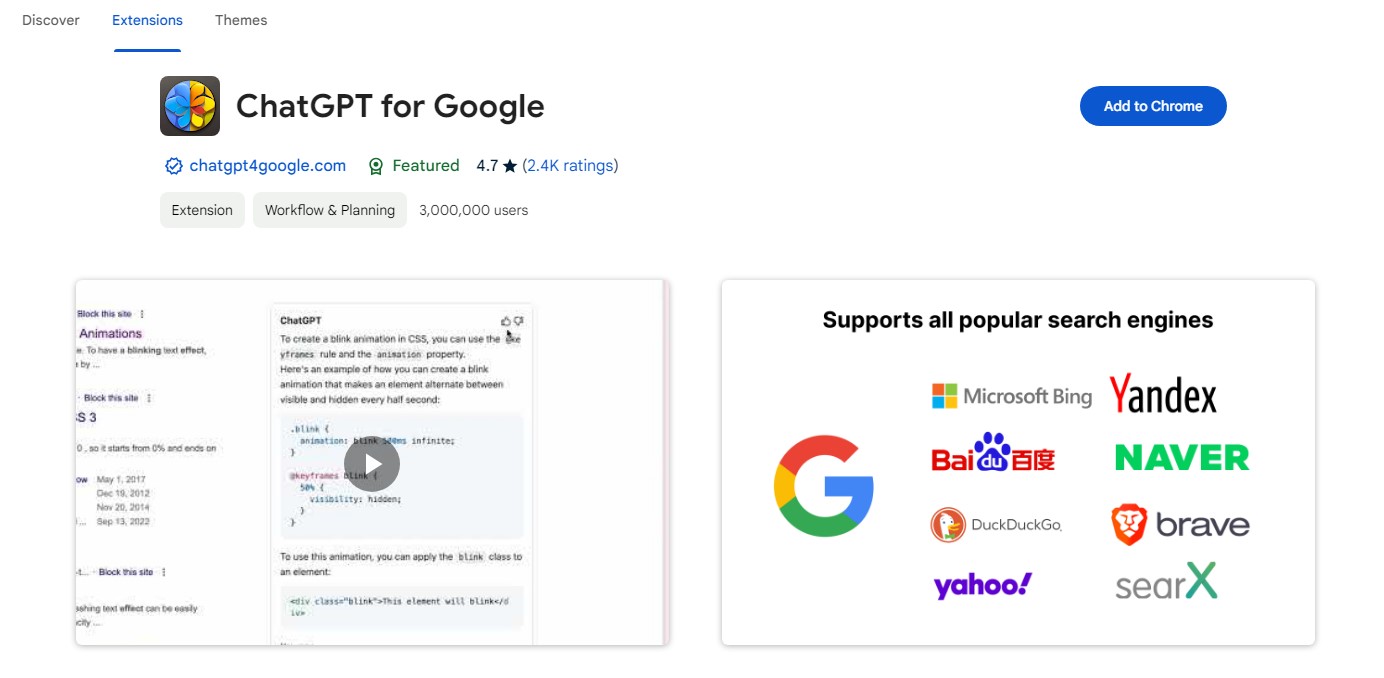
An extension that shows AI answers next to your search results needs permission to read and change the content of every page you visit. That is the same access as a password manager, granted to a tool you probably installed on a whim.
Three things follow:
- Extensions update themselves silently. The version you reviewed is not necessarily the version running next week.
- Extensions get sold. A popular free extension is a valuable asset precisely because of the access it already holds. Buyers have repeatedly pushed updates that inject ads, redirect affiliate links, or exfiltrate browsing data — to users who installed something entirely reputable.
- “ChatGPT” in the name means nothing. OpenAI does not publish a browser extension for search-result answers. Every one of these is third-party, whatever the icon looks like.
This is not a reason never to install one. It is a reason to choose deliberately.
What to check before installing
1. The permissions
On the store listing, read what it wants. In Chrome, after installing, check chrome://extensions → Details → Site access:
| Access | What it means |
|---|---|
| On all sites | Reads and can modify everything you look at — including your bank and your email |
| On specific sites | Limited to those. Much better. |
| On click | Only acts when you invoke it. Best. |
Set it to “On click” wherever the extension still works that way. This is the single most effective thing you can do, and it takes ten seconds.
2. The publisher
Is there a real company or person behind it, with a website that existed before the extension? A privacy policy that names an entity? A support address that is not a free mailbox? An anonymous publisher with a million users is not reassuring — it is the profile that gets acquired.
3. The reviews, read properly
Ignore the average. Sort by most recent and read the one-star reviews from the last few months. This is where a change of ownership shows up first: a long run of praise, then a sudden cluster of “it started opening tabs” or “this used to be good”.
4. Whether it needs your own API key
Extensions that ask for an OpenAI API key are a mixed bag. They cost you per use rather than a subscription, which can be much cheaper. But an API key is a credential that spends money.
If you give an extension an API key, set a spending limit on it in your OpenAI account first. And never paste a key into an extension whose publisher you cannot identify — it is sent to their servers in many designs, and you will not know until the bill arrives.
5. Whether you need an extension at all
Often not. Before installing:
- The ChatGPT app covers most of what these do, without page access.
- Edge has Copilot built in, and Chrome has AI features arriving natively.
- Pasting a URL or text into ChatGPT achieves the same summarising with no permissions at all.
The categories, and what to expect
- Search sidebars — an AI answer beside Google or Bing results. The most useful category, and the one needing the broadest permissions.
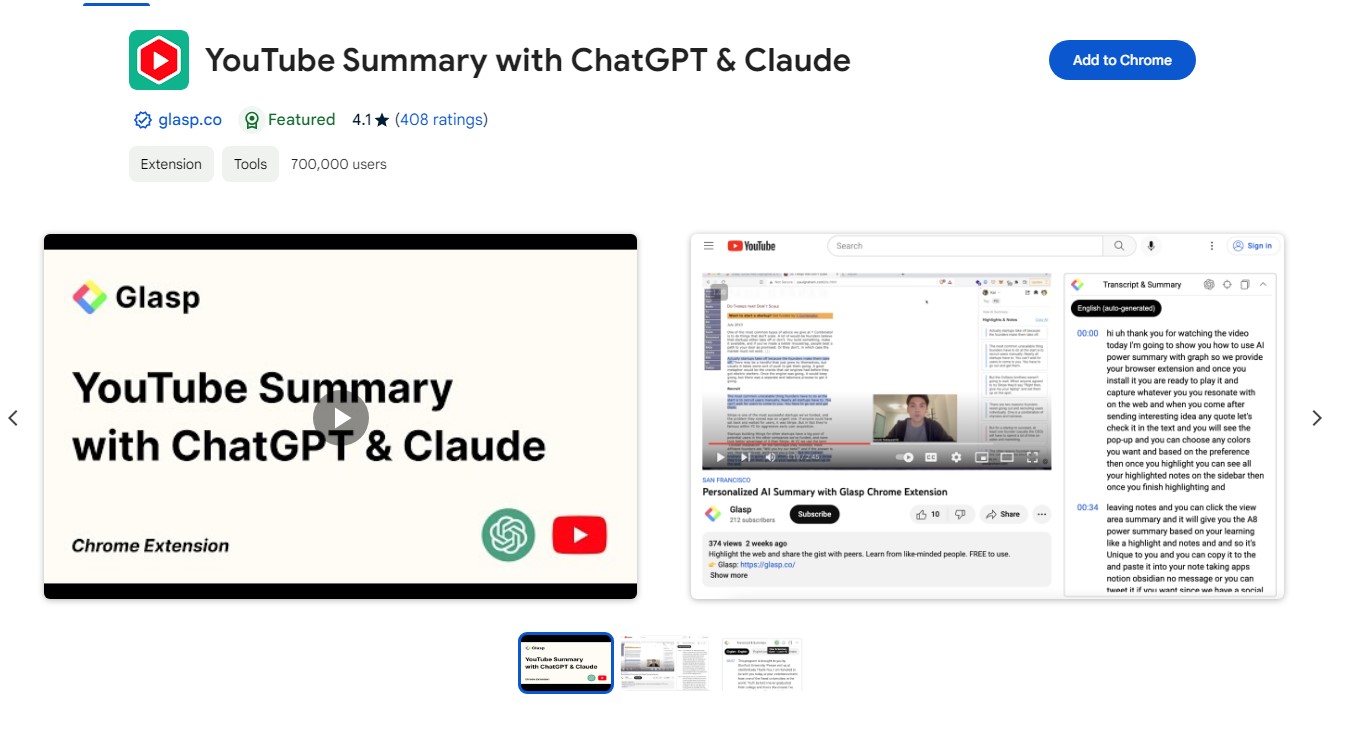
- Page and video summarisers — condense an article or a YouTube transcript. Genuinely time-saving; check anything factual, since a summary of a transcript inherits every error in it.
- Writing assistants — drafting help inside any text box. Convenient, and by definition reading everything you type.
- Prompt libraries — saved prompts, usually low-risk since they need little access.
- Social media post generators — the category with the weakest publishers and the highest turnover. Treat with the most suspicion.
Good habits once installed
- Review your extensions every few months. Remove anything you have stopped using — an unused extension still has full access.
- Set site access to “On click” for everything that tolerates it.
- Keep them out of incognito unless there is a reason. See extensions in incognito mode.
- Watch for behaviour changes. New tabs, changed search engine, unexpected ads — remove it immediately and check
chrome://extensionsfor anything you did not install. - Use Chrome’s task manager (Shift + Esc) if the browser slows down. See how to speed up Chrome.
Frequently asked questions
Is there an official ChatGPT browser extension?
OpenAI publishes apps for desktop and mobile, and an app for Microsoft Office. Extensions that put ChatGPT answers next to search results are all third-party, regardless of naming.
Are ChatGPT extensions safe?
Some are. The category as a whole has a poor record, mainly because the required permissions are broad and popular extensions get sold. Check permissions and recent reviews, and prefer “on click” access.
Do they cost money?
Varies. Some are free with limits, some are subscriptions, some use your own API key and bill you for usage. A completely free extension with server costs is monetising something — usually your data.
Will an extension slow my browser down?
Any extension running on every page has a cost. Chrome’s task manager shows exactly which are expensive.
Can they see my passwords?
An extension with access to all sites can read page contents, including what you type into forms. That is why the permission matters and why “on click” is worth setting.
What about Edge, Firefox and Brave?
Chrome extensions install in Edge and Brave with the same considerations. Firefox has its own add-on store; the same rules apply — check permissions, publisher and recent reviews.