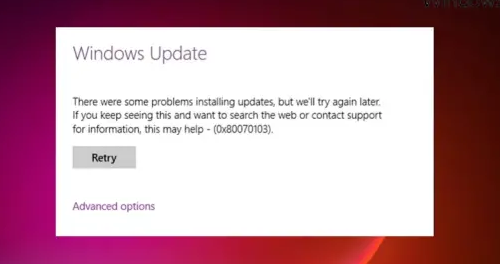
Error 0x80070103 is Windows Update refusing to install a driver you already have — or one it considers no better than the one installed. Unlike most update errors, it usually means nothing is broken. The update fails, everything keeps working, and the entry sits in your update history looking alarming.
This guide explains when you can safely ignore it, and what to do in the cases where it is hiding a real problem.
Checked August 2026. Applies to Windows 11 (all supported versions) and Windows 10 22H2. Remember that Windows 10 left support on 14 October 2025, with consumer Extended Security Updates running only to 12 October 2027.
What 0x80070103 actually means
Windows Update delivers optional driver updates alongside security patches. The error appears when it tries to install one and the driver store rejects it, for one of these reasons:
- The same driver is already installed. The most common case by far.
- A newer driver is already installed — usually because you installed it yourself from NVIDIA, AMD, Intel or the laptop manufacturer. Windows Update is offering an older one and being refused.
- Two devices share one driver package, so Windows attempts to install it twice and the second attempt fails.
In all three cases the hardware is fine. Graphics cards, sound cards, chipset and network adapters are where it shows up most.
When you can ignore it
If the device works, ignore the error. Genuinely.
A driver update that fails with 0x80070103 has changed nothing — Windows did not partially install anything and did not roll anything back. The only real cost is that Windows Update will keep retrying and keep logging the failure.
Check the device is healthy first:
- Right-click Start and choose Device Manager.
- Look for any yellow warning triangles.
No warnings means no problem to fix. Move to the section on hiding the update so the error stops recurring.
1. Check for a real driver problem first
If a device is misbehaving — no sound, a display stuck at the wrong resolution, wi-fi dropping — then the failed update is a symptom worth chasing.
- Open Device Manager.
- Expand the category, right-click the device and choose Properties.
- On the General tab, read the device status message.
- On the Driver tab, note the driver date and version.
Then get the driver from the hardware maker rather than from Windows Update. For a laptop, use the manufacturer’s support page for your exact model — their build is tested against your specific hardware in a way the generic package is not.
2. Install pending optional updates
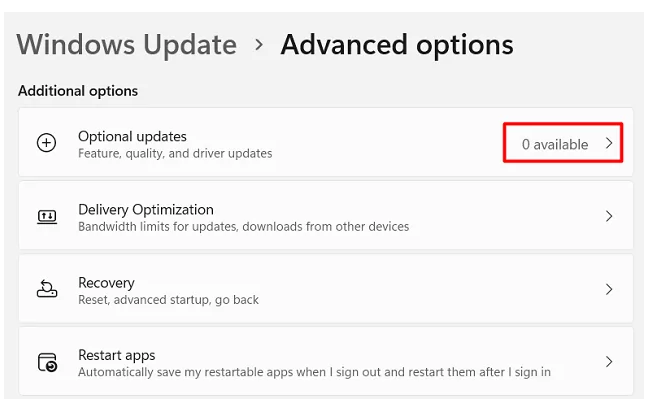
Sometimes the failing driver is waiting behind another update.
Windows 11: Settings → Windows Update → Advanced options → Optional updates.
Windows 10: Settings → Update & Security → Windows Update → View optional updates.
Expand Driver updates, tick what is listed, and choose Download and install. If the list is empty, there is nothing pending and you can move on.
3. Run the Windows Update troubleshooter
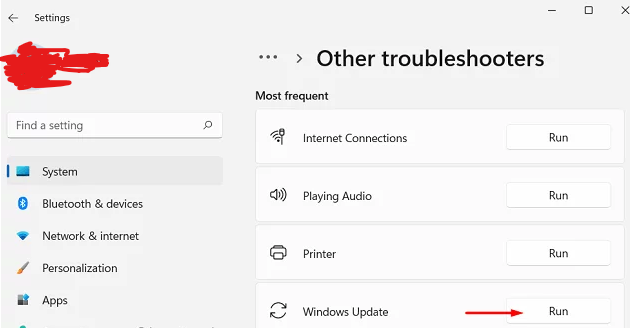
Windows 11: Win + I → System → Troubleshoot → Other troubleshooters → Run next to Windows Update.
Windows 10: Win + I → Update & Security → Troubleshoot → Additional troubleshooters → Windows Update.
If it offers Apply this fix, take it.
4. Hide the update so it stops retrying
This is the proper answer when the driver is genuinely unwanted — for example Windows Update insisting on an older graphics driver than the one you installed deliberately.
Microsoft publishes a Show or hide updates troubleshooter (wushowhide.diagcab) for exactly this. Run it, choose Hide updates, tick the driver, and Windows will stop offering it.
To stop Windows offering driver updates at all — worth doing on a machine with carefully chosen drivers:
- Press Win + R, type
sysdm.cpl, press Enter. - Go to the Hardware tab → Device Installation Settings.
- Choose No, then Save Changes.
Security updates still arrive; only manufacturer apps and custom icons stop coming through Windows Update.
5. Temporarily disable interfering software
Several kinds of software block driver installation:
- Third-party antivirus and endpoint protection
- Firewalls beyond the built-in one
- VPN clients, which install their own network adapters
- Custom DNS configurations that stop Windows reaching the update servers
- Vendor tuning utilities that manage the driver themselves
Turn them off, retry, and turn them back on. If a VPN client is installed, disconnect it — its virtual adapter is a common source of network driver conflicts.
6. Reset the Windows Update components
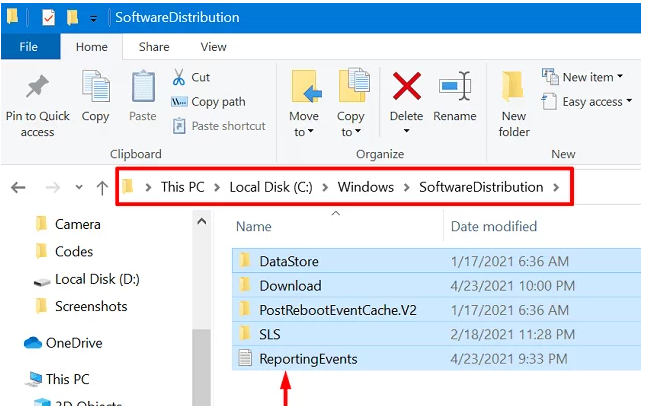
If the error persists across several attempts, clear the update cache. Open Command Prompt or Terminal as administrator:
net stop wuauserv
net stop cryptSvc
net stop bits
net stop msiserver

ren C:\Windows\SoftwareDistribution SoftwareDistribution.old
ren C:\Windows\System32\catroot2 catroot2.old

net start wuauserv
net start cryptSvc
net start bits
net start msiserver
Start every service you stopped. A widely copied version of these instructions stops four services and starts only one or two. The result is a machine where Windows Update appears to work but silently never installs anything. If in doubt, reboot — that starts them all.
Rename the folders rather than deleting them. Windows recreates both on the next check, and you still have the originals if something else goes wrong.
7. Repair system files
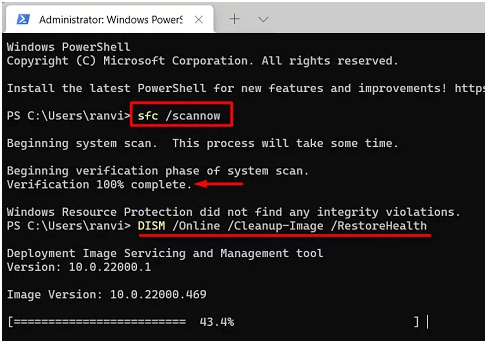
From an elevated Command Prompt:
DISM /Online /Cleanup-Image /RestoreHealth
sfc /scannow
Reboot afterwards and check for updates again.
8. Install the driver by hand
If you do want the driver Windows Update cannot install:
- Identify the device in Device Manager.
- Download the current driver from the hardware maker — for a laptop or prebuilt PC, from the system manufacturer’s support page for your model.
- Uninstall the existing driver: right-click the device → Uninstall device, and tick Attempt to remove the driver if offered.
- Run the downloaded installer and restart.
For graphics drivers specifically, the vendor’s own installer (NVIDIA app, AMD Adrenalin, Intel Driver & Support Assistant) handles the removal and install more cleanly than doing it by hand.
Frequently asked questions
Is 0x80070103 dangerous?
No. It is Windows declining to install a driver that is already present or already newer. Nothing is partially installed and nothing is left in a broken state.
Why does it keep coming back?
Because Windows Update retries on a schedule. Hide the specific update with the Show or hide updates troubleshooter, or turn off driver delivery in Device Installation Settings.
Should I use a driver updater tool to fix it?
No. Third-party driver updaters are a poor trade: they bundle unwanted software, frequently install generic drivers over vendor-tested ones, and are a long-standing malware vector. Device Manager and the hardware maker’s own page cover everything you need.
I get 0x80070103 on a cumulative update, not a driver.
That is unusual and worth investigating rather than hiding. Run DISM and SFC, then reset the update components. If it persists, download the specific KB from the Microsoft Update Catalog and install it directly.
Can I just ignore it forever?
If your hardware works, yes. The only reason to act is a device that is genuinely misbehaving, or the annoyance of a permanent red mark in the update history — which hiding the update removes.