Status, checked August 2026. KB5022291 was a January 2023 cumulative update for Windows 10 22H2. It has been superseded many times, and Windows 10 left support on 14 October 2025. Consumer Extended Security Updates end on 12 October 2027. Do not go looking for this specific package — but the troubleshooting below applies to any Windows update that will not install.
This page covers the general fix sequence for a stuck Windows update, using the steps that resolved KB5022291 at the time. They work on Windows 11 too.
1. Check the Windows Update service
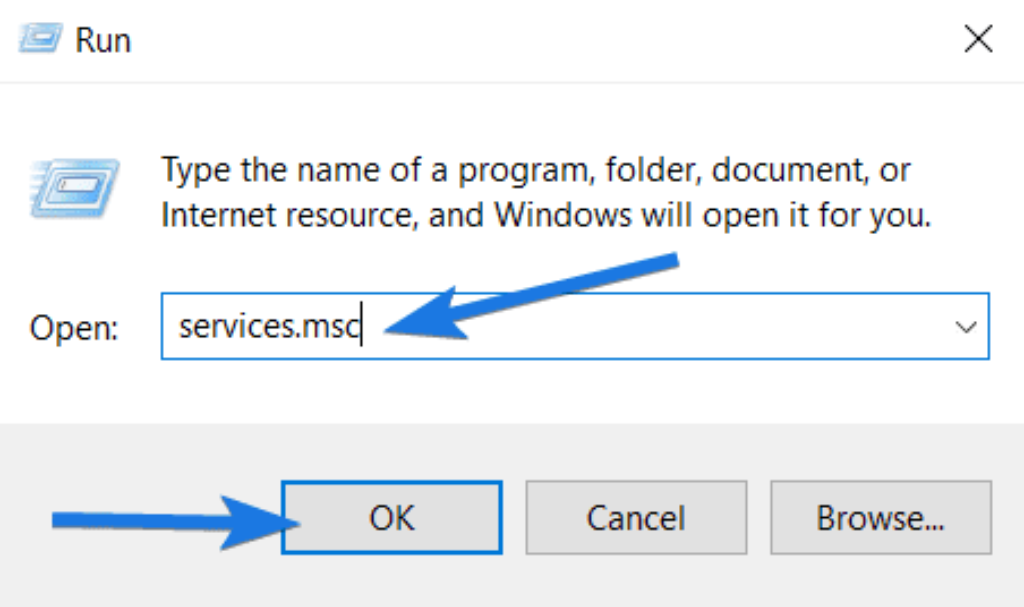
The most common concrete cause: the service is disabled, usually by a “debloat” script run at some point.
- Press Win + R, type
services.msc, press Enter. - Scroll to Windows Update, right-click → Properties.
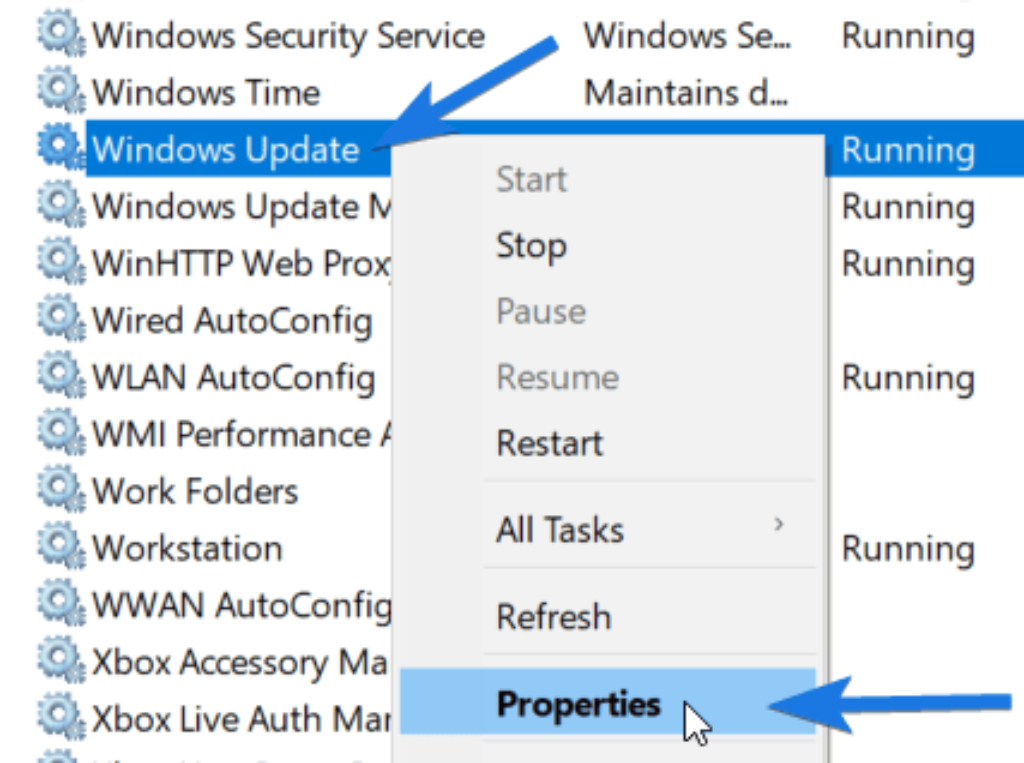
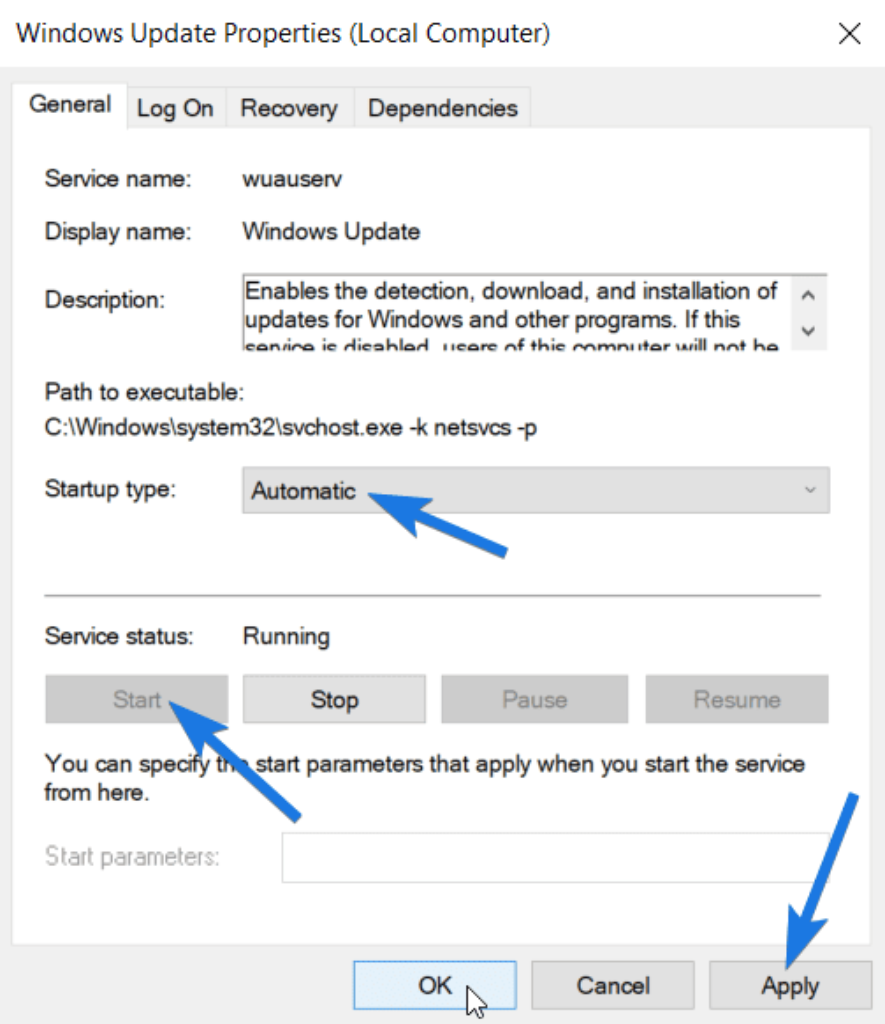
- Set Startup type to Automatic (or Manual, which is also normal).
- Select Apply, then Start.
Check these three as well, since they all have to work:
- Background Intelligent Transfer Service — Manual
- Cryptographic Services — Automatic
- Windows Installer — Manual
2. Run the Windows Update troubleshooter
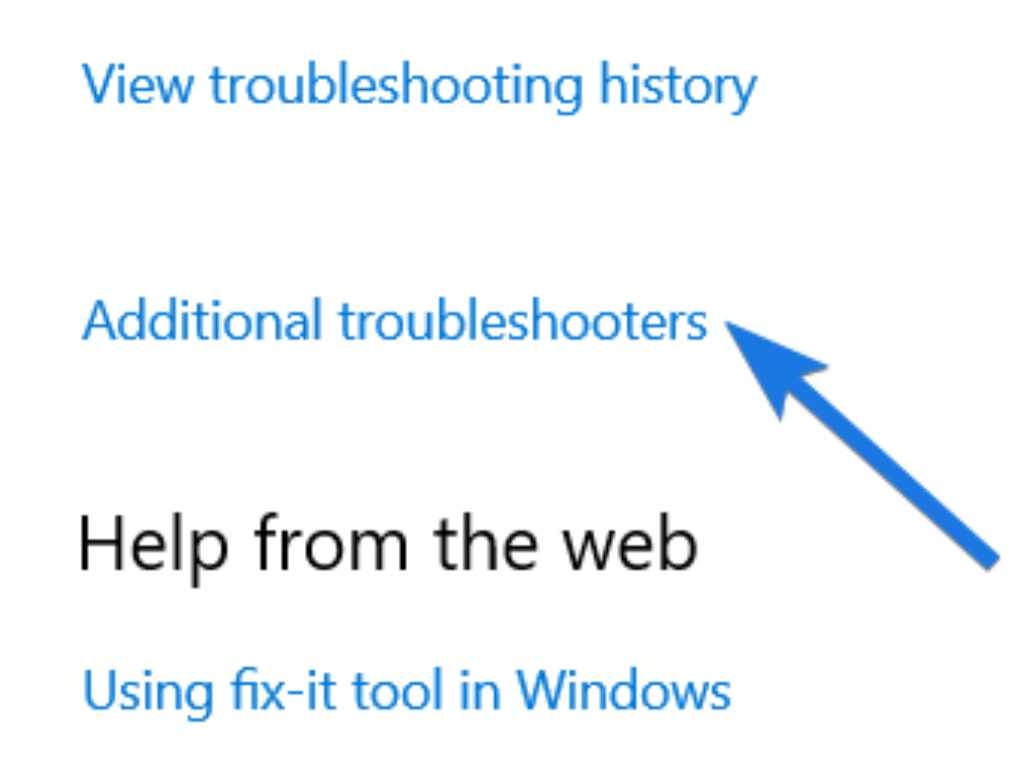
Windows 11: Win + I → System → Troubleshoot → Other troubleshooters → Run next to Windows Update.
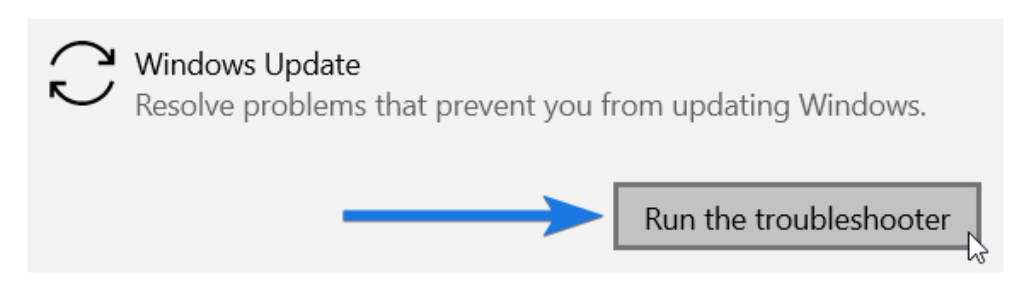
Windows 10: Win + I → Update & Security → Troubleshoot → Additional troubleshooters → Windows Update → Run the troubleshooter.
3. Reset the update components
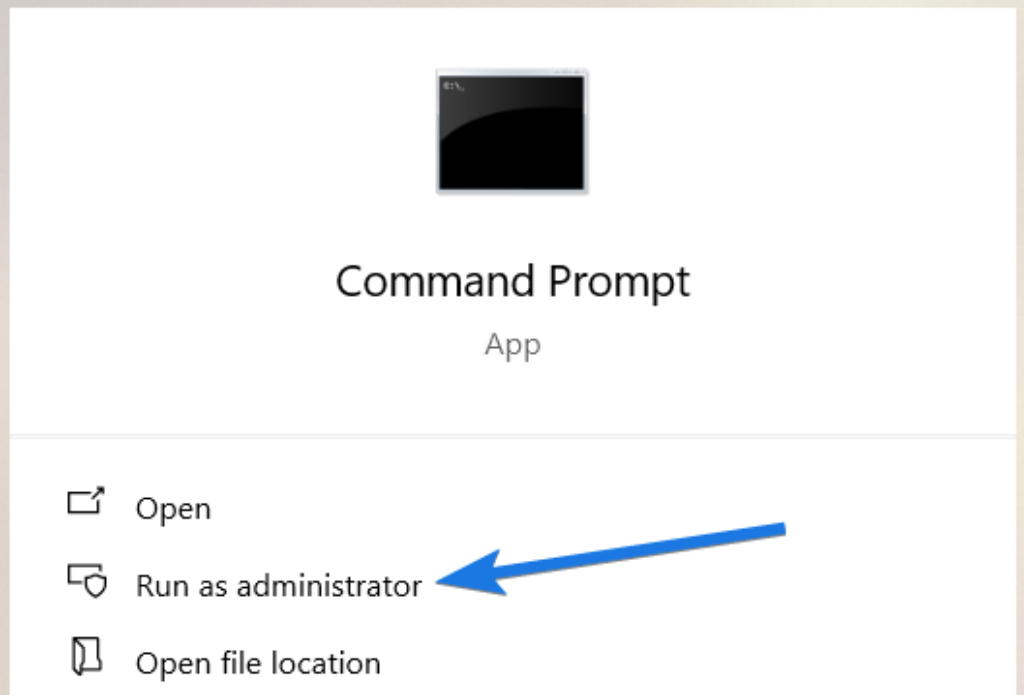
The main manual fix. From an elevated Command Prompt:
net stop wuauserv
net stop cryptSvc
net stop bits
net stop msiserver

ren C:\Windows\SoftwareDistribution SoftwareDistribution.old
ren C:\Windows\System32\catroot2 catroot2.old

net start wuauserv
net start cryptSvc
net start bits
net start msiserver
Start every service you stopped. Widely copied versions of this sequence stop four services and start only one or two. The result is a machine where Windows Update appears normal but silently never installs anything. If you lose track, reboot — that starts them all.

Restart the machine, then check for updates once.
4. Repair the component store
DISM /Online /Cleanup-Image /RestoreHealth
sfc /scannow
DISM first, then SFC — SFC repairs system files using the store that DISM repairs. Reboot afterwards.
5. Free up disk space
Updates need considerably more room than their download size suggests: 8–10 GB for a cumulative update, 20–30 GB for a feature update. See how to free up space.
6. Install the update manually
If one specific update keeps failing, bypass the pipeline:
- Note the KB number from Update history.
- Search for it in the Microsoft Update Catalog.
- Download the package matching your version and architecture.
- Run the
.msuand restart.
If the manual install works, the download path was at fault rather than the system.
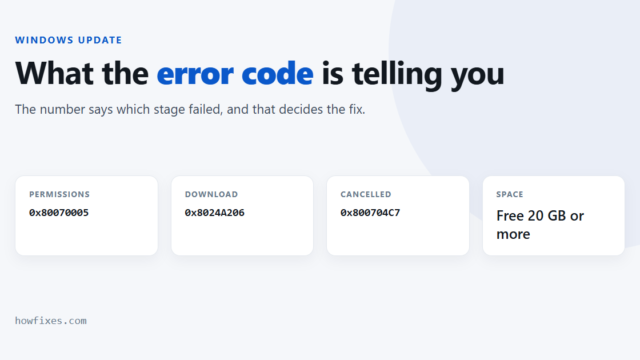
7. Look at the error code
The code is far more useful than the KB number, and each one points somewhere specific:
- 0x80070005 — access denied
- 0x8024A206 — the downloaded package failed its integrity check
- 0x800704C7 — the operation was cancelled
- 0x80070103 — a driver that is already installed
If you are still on Windows 10
Worth saying plainly, because it now outweighs any individual update problem. Windows 10 stopped receiving security updates on 14 October 2025. Consumer ESU covers you only until 12 October 2027, and enrolment is required — it is not automatic.
If the machine can run Windows 11, upgrade: see “this PC can’t run Windows 11” for the requirements, most of which are firmware settings rather than hardware limits.
Frequently asked questions
Should I install KB5022291?
No. It is a January 2023 package for a branch that no longer receives updates. Install the current cumulative update for whatever version you are running.
Will renaming SoftwareDistribution lose anything?
Only your update history list. No installed updates are removed and no personal files are touched — it is a cache.
Why does the update keep failing after all this?
Work down the specific error code rather than repeating general fixes. If the code points at storage or integrity, check the drive’s health as well.
Is it safe to skip an update?
Updates are cumulative, so a later one contains everything an earlier one did. Skipping a single failing update is usually fine as long as the next one installs.