Status, checked August 2026. KB5023008 was a Windows 11 Insider preview from the Beta Channel in February 2023 — builds 22621.1250 and 22623.1250. It was never a public update, and the branch it targeted (Windows 11 22H2) is now out of support entirely. The features it previewed, including screen recording in the Snipping Tool, shipped long ago and are standard today. The current release is Windows 11 25H2.
People still land on this KB number for two reasons: an old Insider machine reporting a build it can no longer update from, or a search for the Snipping Tool’s recording feature that first appeared here. This page covers both, plus what those builds actually were — which the original coverage, ours included, muddled at the time.
What KB5023008 actually was
KB5023008 was released to the Beta Channel of the Windows Insider Program, not to the public. It produced two build numbers, and the difference between them is the part that confuses people:
| Build | What it meant |
|---|---|
| 22621.1250 | New features present but switched off by default |
| 22623.1250 | New features rolling out and enabled |
Microsoft used this pair to A/B test features inside the Beta Channel. Insiders previously on build 22622 were moved to 22623 automatically by an enablement package, which does nothing but raise the build number so the two groups can be told apart. That is why the numbers jump oddly — 22622 to 22623 was a label change, not a new operating system.
What it previewed
Screen recording in the Snipping Tool
The headline was the addition of a pause control while recording in the Snipping Tool, along with performance and reliability work. This was part of the broader change that turned the Snipping Tool from a screenshot utility into a screen recorder.
That feature is no longer new or optional. On current Windows 11 it is built in: press Win + Shift + S, or open the Snipping Tool and switch to the record mode. There is nothing to install and no KB to chase.
A policy for taskbar search
The other genuinely useful change was a policy letting IT administrators control how the taskbar’s search box is presented across an organisation — whether it appears as a full box, an icon, or not at all. That control also survives in current Windows 11, under Settings → Personalisation → Taskbar for individuals, and as Group Policy for managed fleets.
Fixes in build 22623.1250
Most of the fix list was about the taskbar search box, which had been unstable in the preceding builds:
- The search box worked again after previously disappearing.
- Dragging a window by the area near the search box worked again.
- The box no longer vanished — leaving an empty gap on the taskbar — after being clicked.
- The box no longer shifted slightly to the left when clicked.
- With auto-hide enabled, pressing the Windows key and typing no longer left the taskbar stuck part-way through hiding.
- Keyboard focus no longer jumped away from the results when navigating them with the arrow keys.
- Narrator could read dialog text it had previously skipped, and correctly reported focus on the search box.
- Under a contrast theme, selecting a row from the Actions page selected it properly.
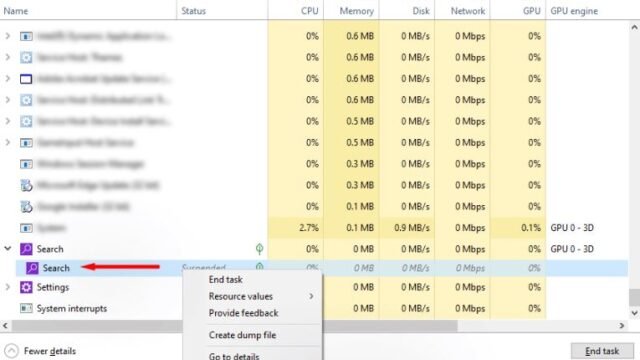
- A confirmation dialog that failed to appear after an action on the Task Manager Details tab was restored.
- Increasing text size no longer produced a meaningless “see more” button.
Why you cannot install it now
Insider preview packages are not published to the Microsoft Update Catalog and are not offered outside the Insider Program. Beyond that, the branch is gone: Windows 11 22H2 left support for Home and Pro in October 2024, and for Enterprise and Education on 14 October 2025. A 22621 build receives no security updates of any kind today.
If a machine is sitting on one of these builds, the fix is not this KB. It is to move the machine to a supported release.
Where Windows 11 is now
| Version | Build family | Support status (August 2026) |
|---|---|---|
| Windows 11 25H2 | 26200 | Current release |
| Windows 11 24H2 | 26100 | Home and Pro supported until 13 October 2026 |
| Windows 11 23H2 | 22631 | Home and Pro ended 11 November 2025; Enterprise and Education until 10 November 2026 |
| Windows 11 22H2 | 22621 | Out of support on every edition |
To check where you are, press Win + R, type winver and press Enter.
If an update will not install
The advice below applies to any stuck Windows 11 update, not just this one. Work through it in order.
1. Run the Windows Update troubleshooter
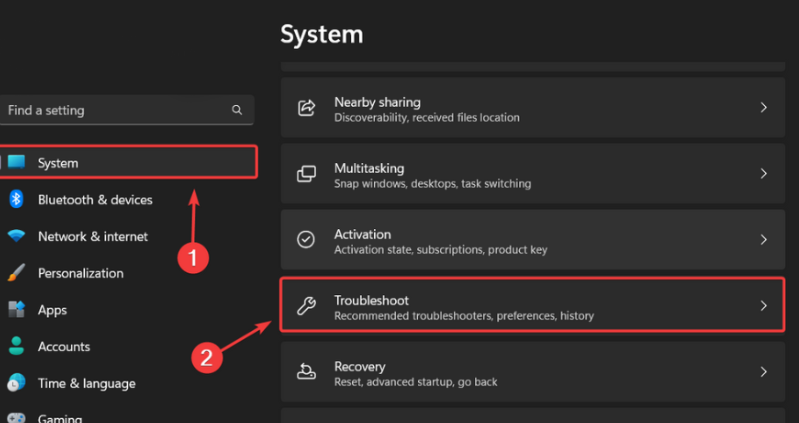
- Press Win + I to open Settings.
- Go to System → Troubleshoot.
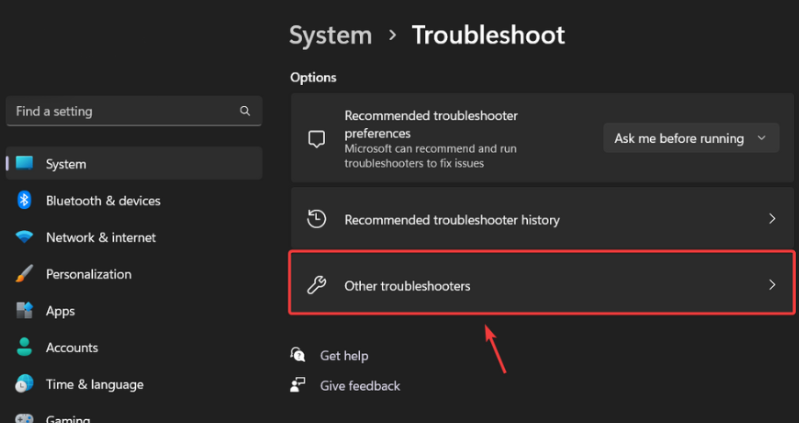
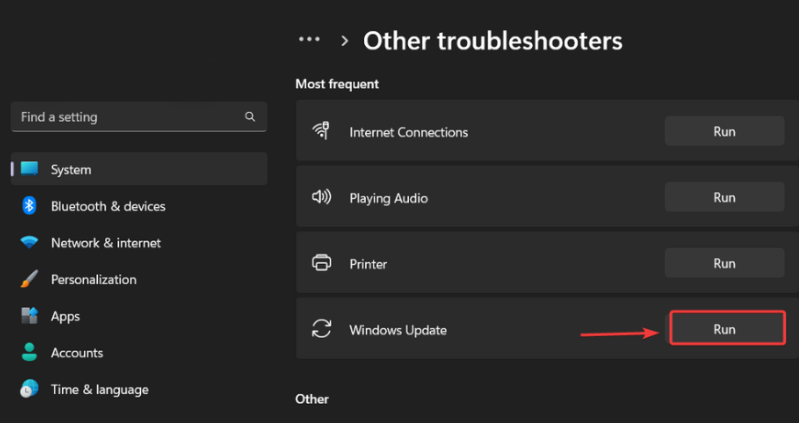
- Choose Other troubleshooters.
- Press Run next to Windows Update.
2. Make room
Feature updates want upwards of 20 GB of free space on the system drive, and will fail without explaining why. Settings → System → Storage shows what is using it.
3. Repair the component store
From an elevated Command Prompt:
DISM /Online /Cleanup-Image /RestoreHealth
sfc /scannow
Then reboot and try the update again. A damaged component store is the most common cause of an update that downloads, installs to 100%, and then rolls back.
4. Check the specific error code
Windows Update failures usually carry a code, and the code is far more useful than the KB number. We cover several of the common ones: 0x80070103, 0x80070005 and 0x80072F8F – 0x20000.
How Windows updates are released
Microsoft ships security updates on the second Tuesday of each month, known informally as Patch Tuesday. Those are the packages that reach everyone. Preview updates for the following month go out in the last week of the month to anyone who opts in, and Insider builds — like KB5023008 — go to the Canary, Dev, Beta and Release Preview channels ahead of both.
Insider builds are for testing. They are not a way to get features early on a machine you depend on, and they carry no support commitment.
Frequently asked questions
Is KB5023008 a security update?
No. It was an Insider Beta Channel preview focused on features and bug fixes, not a Patch Tuesday security release.
Why do I see two build numbers for the same KB?
Because Microsoft was testing the same code in two configurations: 22621.1250 with the new features off, and 22623.1250 with them on. The higher build number is an enablement package, not a larger update.
Can I still record my screen with the Snipping Tool?
Yes. Screen recording is a standard part of the Snipping Tool on supported Windows 11 releases. Open the Snipping Tool and switch from the camera icon to the record icon, then choose an area.
Should I join the Insider Program to get updates like this?
Not on a machine you rely on. Insider builds are unfinished by design, can break drivers and applications, and leaving the programme usually requires a clean reinstall rather than a rollback.