Rewritten August 2026. This page was a 2023 list of named services. That list is out of date — tools in this space appear, change pricing and disappear within months. This version covers how these generators work, what to check before using one, and the copyright and licensing questions that actually matter, none of which go stale.
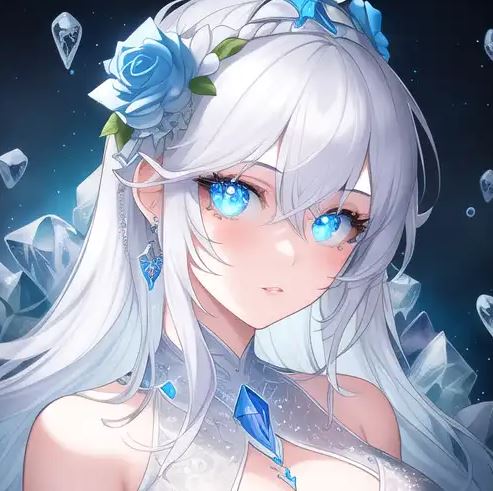
AI image generators produce anime-style artwork from a text description. The technology is now widely available and reasonably good. The parts worth understanding before using one are the licensing, the privacy terms, and the specific problems this genre has.
The two kinds of tool
| Hosted services | Local models | |
|---|---|---|
| Where it runs | Their servers | Your computer |
| Cost | Free tier, then subscription or credits | Free; needs a capable GPU |
| Setup | None | Moderate |
| Privacy | Prompts and images go to them | Nothing leaves your machine |
| Content limits | Enforced by the service | Yours to manage |
The main general-purpose services all produce anime-style work well when asked. Specialist anime tools tend to add style presets and character consistency features rather than a fundamentally different capability.
For local generation, the common route is Stable Diffusion with an interface such as ComfyUI or Automatic1111, plus a style model. It needs a reasonable GPU — realistically 8 GB of video memory or more.
Before you use one, check three things
1. What you are allowed to do with the output
This varies enormously and people assume rather than read:
- Free tiers frequently forbid commercial use. Using an image for anything that makes money can breach the terms you agreed to.
- Some services claim broad rights over what you generate, including using it to promote themselves.
- Some make your generations public by default on a free plan. Worth checking before generating anything you would rather others did not see.
Read the terms for the specific plan you are on, not the marketing page.
2. Whether AI output can be copyrighted
The position in the US, and broadly similar elsewhere: purely AI-generated images are not eligible for copyright protection, because copyright requires human authorship. Substantial human creative input in arranging or modifying a work can be protectable, but the generated part on its own is not.
In practical terms: you can generally use the image, and you may not be able to stop anyone else using it. For a personal project that does not matter. For a logo or a brand identity it matters a great deal.
3. What happens to your prompts and uploads
Hosted services receive everything you type and every image you upload. Some use it for training. If you are uploading a photograph of a real person — your own face, a friend’s — that is a meaningful decision, and it is one people make casually.
The problems specific to this genre
Anime-style generators have two recurring problems, and they are worth naming.
The first is that many models were trained on artwork scraped without permission, and can reproduce a specific living artist’s style closely enough to be identifiable. Generating in a named artist’s style, and particularly publishing or selling it, is a genuine ethical and increasingly legal problem — not a technicality.
The second is that a large part of this ecosystem exists to produce sexual imagery, including — because the style depicts stylised youthful characters — material that is illegal in many jurisdictions regardless of the subject being fictional. Services in this category vary enormously in how seriously they take that. Check what a tool permits and what community it has before associating yourself with it.
Getting better results
- Describe the subject, then the style, then the composition. “A young woman with short silver hair, anime style, soft cel shading, three-quarter view, plain background.”
- Be specific about the style era — 90s cel animation and modern digital anime look quite different, and naming which you want helps.
- Say what you do not want. Most tools accept negative prompts.
- Fix the seed if you want to iterate on one result rather than get a new image each time.
- Generate several and pick, rather than refining one prompt endlessly.
- Hands and text remain weak. Crop or edit rather than fighting the prompt.
Ethical use, briefly
- Do not generate real people without their consent, particularly in any suggestive context. This is the fastest route from a hobby to a serious problem.
- Do not pass AI work off as hand-drawn, particularly in commissions or competitions.
- Avoid prompting a named living artist’s style for anything you publish.
- Support human artists too. Commissions still exist, and a generator cannot do what a person with a brief and a conversation can.
Frequently asked questions
Are AI anime generators free?
Most have a free tier with limits, and charge for volume, resolution or commercial rights. Local models are free to run once you have suitable hardware.
Do I own what I generate?
You generally have a licence to use it under the service’s terms, but purely AI-generated work is not eligible for copyright in the US and similar jurisdictions — meaning you may have no exclusive right to it.
Can I sell AI-generated art?
Depends on the service’s terms — many free tiers prohibit commercial use. Even where permitted, you likely cannot claim copyright over it.
Can I run one on my own computer?
Yes, with Stable Diffusion and an interface such as ComfyUI. Practically, this needs a GPU with 8 GB of video memory or more. Nothing leaves your machine, which is the main advantage.
Why do hands look wrong?
Hands have many joints in highly variable configurations, and are underrepresented in a form models learn well. It has improved and is still the most common visible flaw. Crop or edit.
Is it legal to generate art in a specific artist’s style?
Style itself is generally not copyrightable, but this is being actively litigated and the position is shifting. Regardless of the legal answer, doing it deliberately with a living artist’s name is a poor thing to do and increasingly treated as such.