Microsoft gives the Windows 11 ISO away, directly, with no account and no third-party site involved. The download page offers three routes and it is not obvious which you want, so start here:
| You want to… | Use |
|---|---|
| Upgrade this PC now | Installation Assistant |
| Make a bootable USB stick | Media Creation Tool |
| Keep the file, use a VM, or install several machines | Download the ISO directly |
Only download from microsoft.com. Sites offering “modified”, “lite” or “activated” Windows ISOs distribute images with unknown modifications, and there is no way to audit what was changed. A tampered ISO is a compromised machine from first boot.
Checked August 2026. Windows 11 25H2 is the current release. This matters now: Windows 10 left support on 14 October 2025, and consumer Extended Security Updates end on 13 October 2026.
Before you download: check the machine qualifies
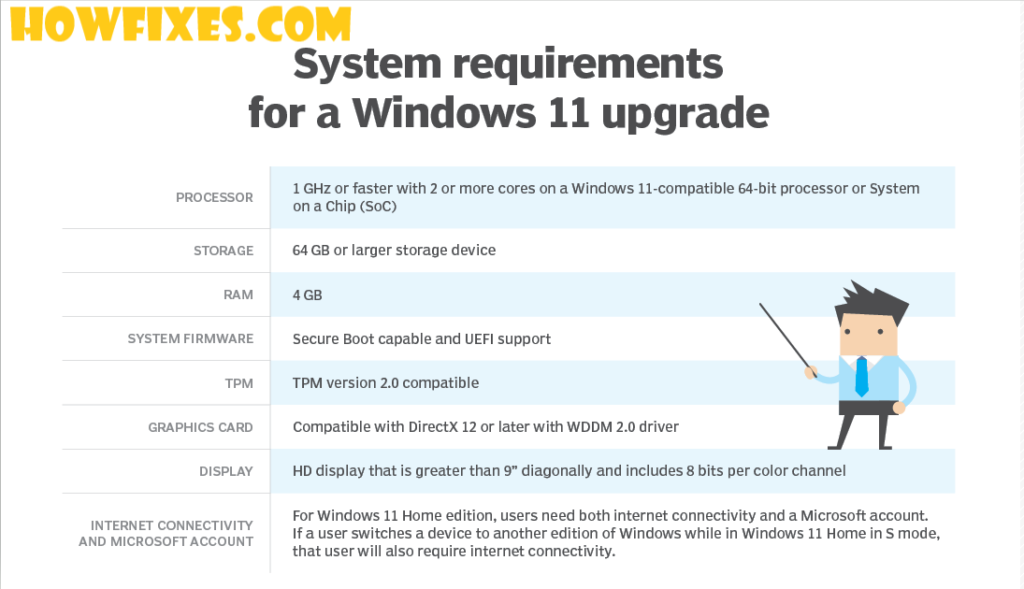
- 1 GHz dual-core 64-bit processor from the supported list
- 4 GB RAM, 64 GB storage — with 20–30 GB free for the install itself
- UEFI firmware with Secure Boot capability
- TPM 2.0
- DirectX 12 graphics with a WDDM 2.0 driver
Run PC Health Check from Microsoft to see which, if any, fails. If it reports a problem, see how to fix “this PC can’t run Windows 11” — TPM and Secure Boot are usually present but switched off in firmware.
Option 1: Installation Assistant
For upgrading the machine you are sitting at, keeping files and applications.
- Go to microsoft.com/software-download/windows11.
- Under Windows 11 Installation Assistant, select Download now.
- Run it. It checks compatibility, downloads, and upgrades in place.
Expect roughly an hour and a couple of restarts. Nothing is erased.
Option 2: Media Creation Tool

For a bootable USB stick, or a clean install:
- From the same page, download Create Windows 11 Installation Media.
- Run it and choose USB flash drive.
- Use a stick of 8 GB or more — it will be erased.
The tool handles a detail that catches people out when they copy files by hand: install.wim now exceeds 4 GB, which FAT32 cannot store. The tool splits it automatically. See “Windows cannot find the Microsoft Software License Terms” for what happens when it is not handled.
Option 3: The ISO file
- On the same page, scroll to Download Windows 11 Disk Image (ISO).
- Select the edition, confirm, choose your language, confirm again.
- Select 64-bit Download. The link is valid for 24 hours.
The file is around 6–7 GB.
Verify what you downloaded
Microsoft publishes a SHA-256 hash on the download page. Check it:
Get-FileHash -Algorithm SHA256 "C:UsersyouDownloadsWin11_25H2.iso"A mismatch means the download is incomplete or altered. Download again.
Using it
- Upgrade in place: right-click the ISO → Mount, then run
setup.exe. This is also the most reliable route when the Installation Assistant fails. - Bootable USB: write it with Rufus, choosing GPT and UEFI.
- Virtual machine: attach the ISO directly. Enable a virtual TPM in the VM settings, or setup will refuse.
Option 4: Just wait for Windows Update
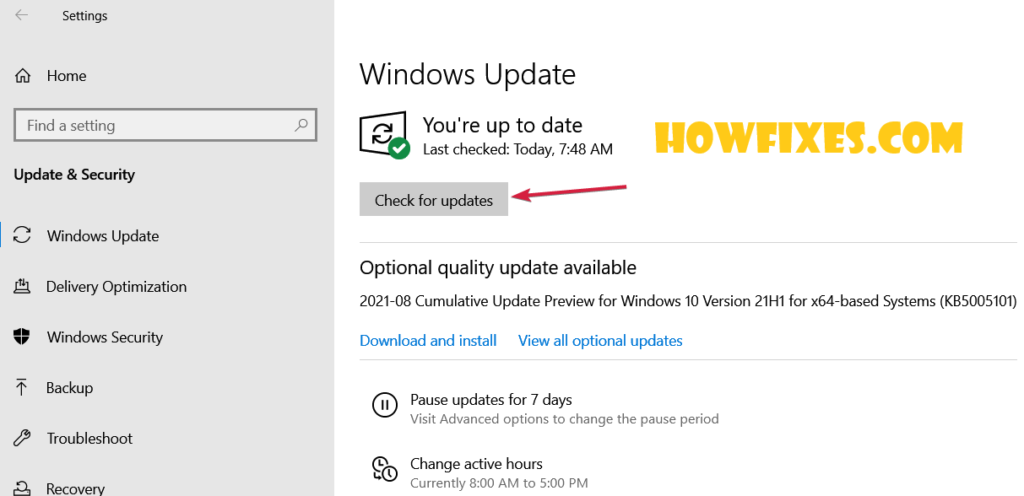
The least effort, and the safest. On an eligible machine the upgrade appears under Settings → Windows Update. Nothing to download by hand, and Microsoft staggers the rollout to catch driver problems early.
Before a clean install
A clean install erases the drive. Back up first, and check two things people forget: browser bookmarks and saved passwords, and your BitLocker recovery key if the drive is encrypted, from account.microsoft.com/devices/recoverykey.
Also note the licence: an activated Windows 10 machine carries its digital licence into Windows 11 automatically. No key is needed. If activation does not follow, see activation error 0x803F7001.
Frequently asked questions
Is the Windows 11 ISO free?
The download is free. Running Windows still needs a licence — though an activated Windows 10 machine already has one that carries over.
Which edition should I choose?
The download offers a single multi-edition image; the edition is selected during setup, or matched automatically to your existing licence. Home suits most people. Pro adds BitLocker management, Group Policy, Remote Desktop hosting and Hyper-V.
Can I download an older version, such as 23H2?
Microsoft’s consumer page offers only the current release. Older ISOs are available through a Visual Studio subscription. Given that 23H2 left support for Home and Pro in November 2025, there is rarely a good reason to want one.
Do I need a product key?
Not to install — setup lets you skip it. Not to activate either, if the machine was previously activated on Windows 10 or 11, because the digital licence is recognised from the hardware.
How long does the upgrade take?
Typically 30–90 minutes depending on the drive. Much longer on a mechanical hard disk. Leave it alone while it works — see how long to wait when Windows appears stuck.